
Primary Goal
The project aims to create a science-based Action Plan for the remediation and protection of lakes. This plan is designed to be collaborative, involving scientists, public authorities, businesses, and local citizens.
Key Objectives
- Nature-Based Solutions (NbS): Designing and implementing innovative, nature-based methods to improve biodiversity and the chemical/ecological status of lakes.
- Digital Innovation: Using "4.0 Digital solutions" to enhance ecosystem monitoring and facilitate the transfer of knowledge between different regions.
- Circular Economy: Promoting business models that transition from a "Blue" to a "Green" economy, ensuring that lake restoration is both environmentally and economically sustainable.
- Community Empowerment: Educating and engaging stakeholders and citizens to co-design solutions and increase public awareness of lake preservation.
- Scalability: Demonstrating these solutions through specific case studies and "associated regions" to ensure they can be applied across Europe.
The Consortium
The project is a collaborative effort involving 18 organizations across 11 EU countries. This partnership includes:
- 12 Academic and research institutions
- 1 Public authority
- 1 NGO
- 4 Small and Medium Enterprises (SMEs)
Vision
The overarching vision is to establish sustainable, interdisciplinary pathways for lake restoration. The project emphasizes an "adaptable approach" that relies on continuous learning, practical application, and an ongoing dialogue between the scientific community and the public.

SBP-stress-ome
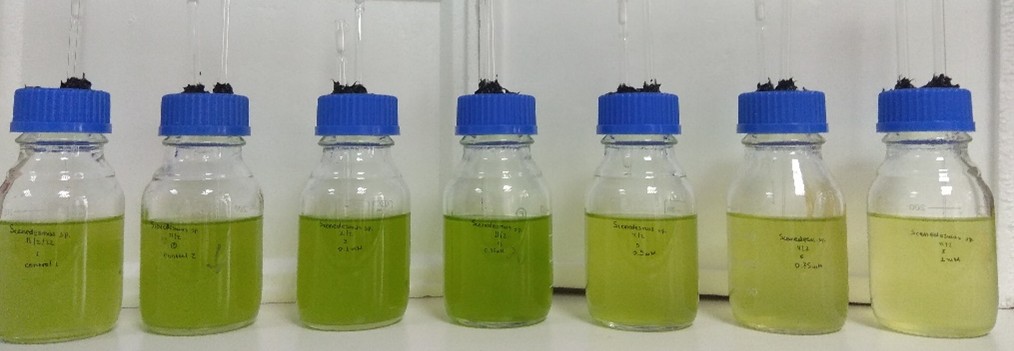
The Laboratory of Environmental Biotechnology will host the research project «Selenium Binding Protein: Exploring the interactome of the novel stress regulator in the model microalga Chlamydomonas reinhardtii - SBP-stress-ome» from November 2025 to November 2027. This project is implemented in the framework of H.F.R.I call “4th Call for H.F.R.I.’s Research Projects to Support Postdoctoral Researchers” (H.F.R.I. Project Number: 28950). Dr. Aikaterini Koletti is the Principal Investigator of the project. Selenium Binding Protein (SBP) is a highly conserved protein and was recently identified as a regulator of oxidative stress response in the microalga Chlamydomonas reinhardtii. CrSBP participates in a protein-protein interaction network, which also includes CrCEP2 (Koletti et al., 2022). The proposed study aims to investigate this interactome, focusing on CrCEP2. Initially, an in-silico analysis will study the phylogeny of CEP2 and its coevolution with SBP. Subsequently, the effects of H2O2-induced oxidative stress on a cep2 deletion mutant of C. reinhardtii will be evaluated. To elucidate the role of CEP2 during abiotic stress adaptations in-depth transcriptomic (total RNAseq) and untargeted metabolomic (GC-MS) analysis will be done. Reverse genetic approaches and crossings will lead to a double mutant, knockout for both SBP and CEP2 proteins. This strain, along with the cep2 and sbd1 mutants and the wild type, will be subjected to various abiotic stressors related to climate change, in order to gain insights into the environmental significance of SBP and its interactome. Overall, the ambition of the proposed study is to elucidate the roles of CEP2 and SBP in regulating abiotic stress responses.

T-Rep
T-ReP Time-Resolving Phageomics Exploring the potential of phage therapy in allergy and asthma. The aim of T-ReP is to quantify phageome variation and phage-bacteria interaction according to population and time, and isolate phages of therapeutic relevance.

EICONA
Synergetic beneficial microbial consortia for improving plant productivity and adaptation in challenging environments. Enhancing Legume Productivity Through Microbial Symbiosis